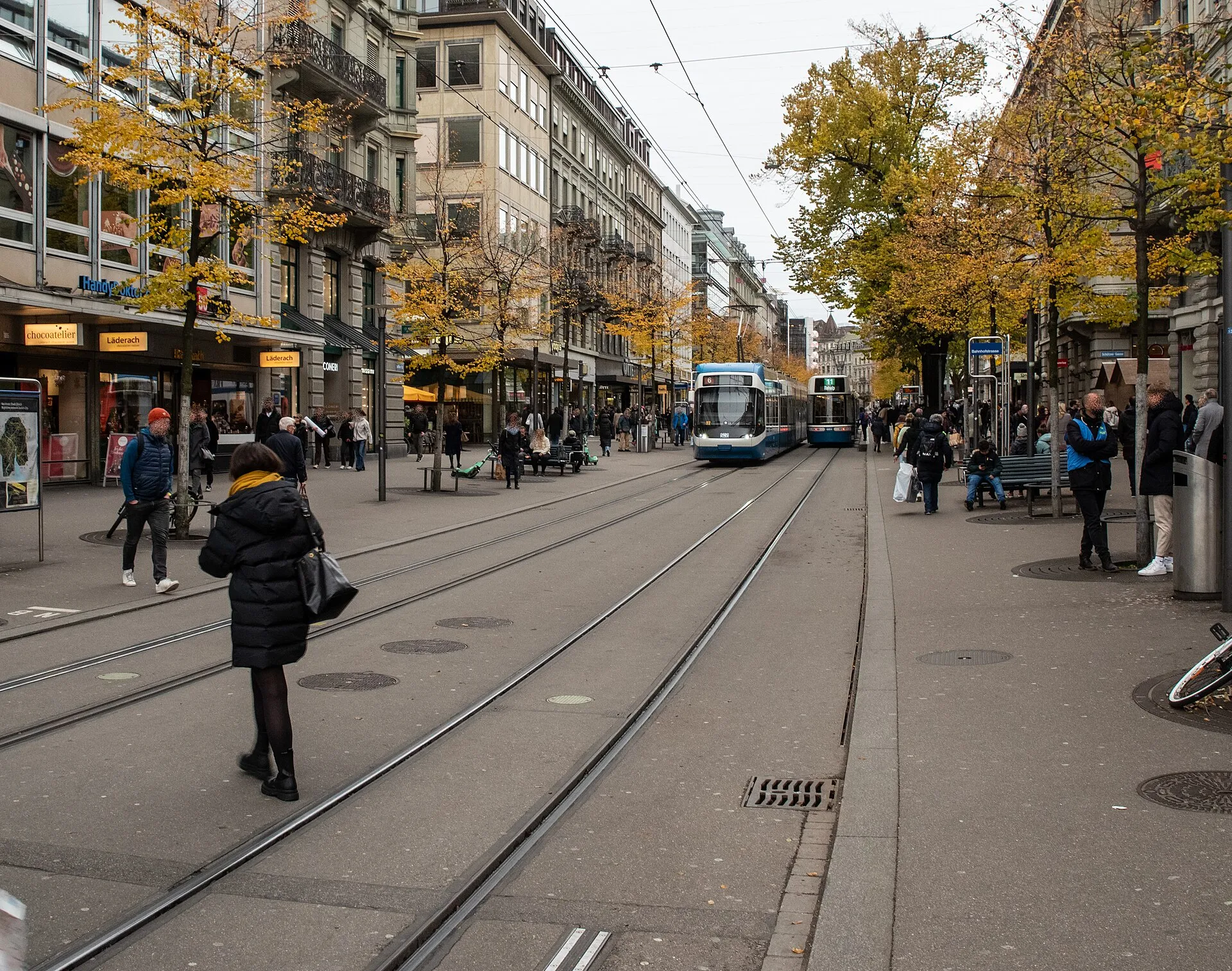

Zurich is a city where everyday life works quickly once you know the right habits. Many things are well organised: public transport, shopping, waste disposal and the way people move through the city. But when you first arrive, it often takes a few days to find the apps and small local rules that really make life easier.
This article is for the first few days. It is useful for short stays, project work, moving into a furnished apartment or simply getting oriented in Zurich. It focuses on practical things you can use immediately, before dealing with longer-term topics such as health insurance, bank accounts or household insurance.
SBB Mobile: the most important app for trains, trams and buses
If you are new in Zurich, it is worth downloading the SBB Mobile app straight away. It is not only for long-distance trains, but also for trams, buses, S-Bahn trains and many boat connections. For everyday use, one app is often enough: search for connections, buy tickets, check delays and show your QR code on the way.
EasyRide is especially practical. You check in in the app before your journey and check out again at your destination. The app then recognises the route you travelled and calculates the right ticket. According to SBB, if several journeys on the same day are cheaper as a day pass, the lower day-pass price is charged automatically.
The important part is simple: check in before boarding and remember to check out at the end. During a ticket inspection, you show the EasyRide ticket in the app. If you travel often, it is also worth looking at the Half Fare Travelcard, day passes or a ZVV travelcard.
ZVV app: useful for Zurich and the region
Alongside SBB Mobile, the ZVV app is helpful. ZVV is the Zurich Transport Network, the fare system for Zurich and the surrounding region. In Zurich, one ticket is valid by zone across several forms of transport: tram, bus, S-Bahn, boat and some mountain railways within the network.
The ZVV app also has a check-in function. For short city trips, zone passes and local connections, it can sometimes feel clearer than SBB Mobile. You do not need to use both apps every day, but it is useful to know both.
A practical start: save the stop near your apartment and your most important destinations, such as work, the main station, university or gym. This lets you quickly see when the next tram or bus leaves.
Discover Switzerland with day passes
If you are new in Zurich, do not stay only in the city. Lucerne, Bern, Basel, the Rhine Falls, St. Gallen, Lausanne and Ticino are all easy to reach by train. For these day trips, the SBB Saver Day Pass is worth checking.
The Saver Day Pass is a limited offer for travel within the GA Travelcard area of validity. According to SBB, prices start from CHF 29 with a Half Fare Travelcard and from CHF 52 without one in 2nd class. It is only available in advance, from six months to one day before travel. The earlier you book, the better your chances of getting a low price.
There is also the Municipal Saver Day Pass. It is sold through participating municipalities and towns, is personal, and is also limited in availability. Check availability and the sales office in advance, because buying it does not work like a normal online ticket.
Coop and Interdiscount sometimes offer special day-pass promotions. These can be attractive, especially if you do not have a Half Fare Travelcard. They are not permanent offers and only apply under the current conditions. Always check the sale period, validity, included transport and redemption deadline. Important: a boat day pass is not the same as a public transport day pass for trains, buses and trams.


Shopping: Migros, Coop and Sundays
For everyday shopping, you will quickly end up at Migros and Coop. Migros is often good for groceries, but usually does not sell alcohol. Coop sells alcohol and often has slightly longer opening hours, depending on the location. There are also Denner, Aldi, Lidl, local bakeries, pharmacies and small neighbourhood shops.
One important point for newcomers: many shops are closed on Sundays. Exceptions include Zurich main station, the airport, petrol station shops, Coop Pronto, avec and some local shops. If you arrive at the weekend, it is better to buy basic groceries early.
Customer cards such as Migros Cumulus or Coop Supercard are not essential, but they are common in everyday Swiss life. If you stay longer or shop regularly, they can be useful for discounts, digital coupons and special offers.
Zuri-Sacks and waste disposal
In Zurich, ordinary household waste is disposed of in the official blue Zuri-Sack. These bags come in different sizes and are available from many retailers. In Migros, Coop and other supermarkets, they are often not placed openly on the shelves. Ask for Zuri-Sacks at the checkout or customer service desk.
Paper and cardboard are collected separately and must be put out on the correct day. Usually they are bundled or neatly folded and placed at the roadside. Glass, metal, batteries, textiles and oil belong at collection points or special return points.
The City of Zurich waste collection calendar or the Entsorgung + Recycling Zurich app is very useful. You can enter your address and receive reminders for household waste, paper, cardboard, textiles, Cargo-Tram and E-Tram collections.
A simple rule helps: household waste goes in the Zuri-Sack, recycling is separated, and cardboard should not simply be placed outside at any time. This avoids problems with the building management, neighbours or the city.
Mobile phone, eSIM and plug adapters
A Swiss phone number is not essential on day one, but it is very practical. Many apps, delivery services, banks and bookings use SMS verification. For short stays, an eSIM can be enough; if you stay longer, compare prepaid and monthly subscription options.
One concrete option is Digital Republic. According to the provider, the Flat Mobile Swiss subscription starts at CHF 13 per month, has no minimum contract term and includes unlimited data, calls and SMS in Switzerland on the 5G network. The eSIM can be activated digitally, which is practical if you need mobile internet and a Swiss number quickly. Before signing up, still check the price, roaming, network coverage and current conditions.
Also think about Swiss power sockets. Many European two-pin plugs fit, but larger Schuko plugs from Germany often do not. A small adapter in your luggage saves unnecessary errands during the first days.
If you live in a furnished apartment, Wi-Fi and basic equipment are usually already provided. Still, it is worth keeping chargers, adapters and a power bank close at hand, especially if you use many apps, maps and tickets on arrival day.
Useful apps for the first days
For the start, a few apps are enough. SBB Mobile and ZVV help with public transport. TWINT is useful for payments, but it often becomes easier once your phone number, address and banking setup are clear. MeteoSwiss is helpful because weather can change quickly between lake, city and mountains. Alertswiss provides official warnings.
For waste collection dates, the ERZ app from the City of Zurich is useful. For orientation in the city, Google Maps, Apple Maps or the ZVV app work well. If you often travel by bike, also check local sharing services and cycle routes.
Save the emergency numbers
Save the most important emergency numbers directly on your phone. In Switzerland and across Europe, 112 works as the general emergency number. You can reach the police directly on 117, the fire brigade on 118 and the ambulance service on 144. For poisoning emergencies, call 145.
For medical questions that are not true emergencies, there are doctors’ emergency services, pharmacies or telemedicine offers depending on the situation. But in a life-threatening situation or serious accident, always call 144 or 112 immediately.
The easiest start in Zurich
For the first few days, it is not important to organise everything perfectly. What matters is that you can move around, buy groceries, dispose of waste correctly and know the right numbers in an emergency. The rest follows step by step.
If you live in a furnished apartment from Apartments Zurich, many starting points are already covered: furniture, kitchen, Wi-Fi, laundry and basic equipment are there. That leaves more time to actually get to know Zurich.